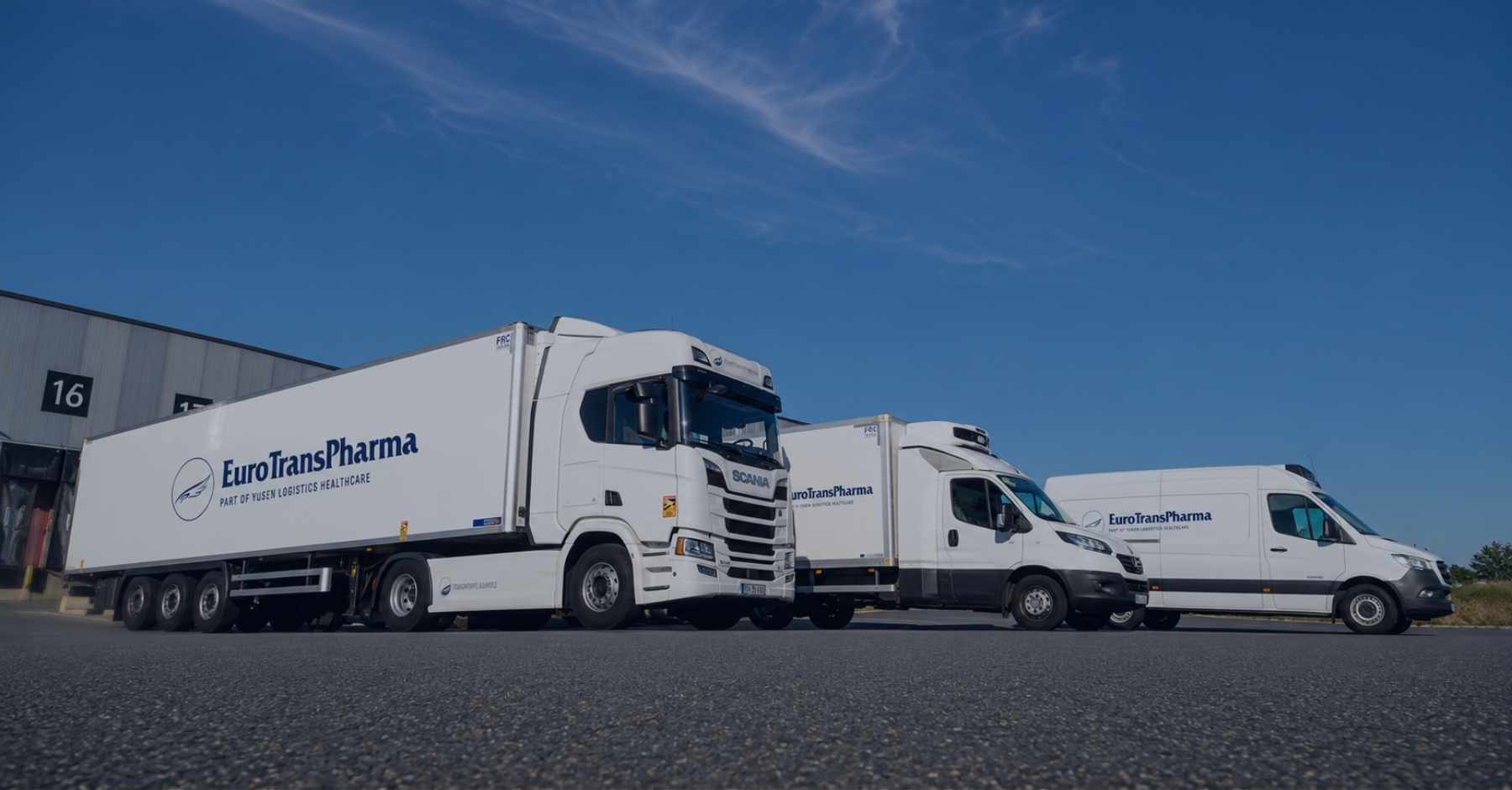
Benelux is home to one of Europe’s most concentrated healthcare and life sciences ecosystems, supported by major logistics gateways such as Antwerp and Rotterdam. Every day, pharmaceutical products move through complex distribution networks connecting manufacturers, hospitals, pharmacies, laboratories and clinical sites.
In this environment, maintaining temperature is only one part of the challenge. For Quality Assurance (QA) and supply chain teams, a temperature excursion is rarely just a temperature excursion. It can trigger investigations, documentation reviews and additional workload, while raising questions during GDP audits. The real objective is not simply to keep products within range, but to maintain control, compliance and operational continuity throughout the distribution process.
As supply chains become more complex and therapies more sensitive, many pharma and biotech companies are reassessing whether their current cold-chain strategy remains the most appropriate for their products and distribution model.
Why are more pharma companies re-evaluating passive shipping
Passive shipping remains a valuable solution for low-volume, occasional or geographically dispersed shipments. However, as distribution networks grow, companies often reassess whether it remains the most effective approach.
In our experience, interest in active temperature-controlled transport is typically driven by operational challenges rather than technology adoption. Common triggers include:
- Growing shipment volumes on fixed routes
- More stringent temperature requirements
- Increasing QA workload from temperature deviations and investigations
- The rise of biologics and specialty therapies
- Sustainability objectives linked to reducing packaging waste
The conversation is rarely about transport alone. It is about supporting product quality, operational efficiency and regulatory compliance as distribution requirements evolve.
When does active temperature-controlled shipping make sense
For recurring distribution routes and higher-volume distribution flows, active transport can provide better operational consistency, real-time temperature control and simplified quality management. This can apply to both last-mile healthcare distribution and freight movements where shipment frequency and volume justify a dedicated temperature-controlled solution
However, active shipping is not a universal solution. The right approach depends on the product, route, volume, and distribution model.
 As Rogier Reimus, Commercial Director at Eurotranspharma Benelux, explains:
“Our role is to help customers select the most appropriate solution for their products and distribution model. In some cases that will be active transport, while in others passive shipping remains the best option. The decision should always be based on product requirements, route characteristics and shipment frequency. Our customers are not looking for a transport provider. They are looking for certainty. Certainty that their products arrive within specification, that they remain audit-proof, and that a single incident does not disrupt their operation.”
When is passive shipping still the right choice?
Despite growing interest in active transport, passive shipping remains an important part of many cold-chain strategies. It can be the preferred solution for low-volume or irregular shipments, products with wider temperature tolerances, or when greater cross-border flexibility is required.
Rather than evaluating active versus passive, the key is choosing the right solution for each distribution flow. Both approaches can play a role within the same cold-chain strategy, which is why Eurotranspharma offers both solutions.
Sustainability considerations: looking beyond packaging
Sustainability is an increasingly important consideration in healthcare logistics. Passive shipping relies on insulated packaging such as EPS foam and gel packs, which can generate significant waste on frequent routes. Active transport can reduce this packaging waste.
Every solution comes with its own strengths and limitations, sustainability therefore cannot be assessed through a single metric. The most responsible solution depends on shipment frequency, route structure and network design.
Beyond temperature control: what changes operationally
For regular pharmacy, clinic or biotech lab routes in the Benelux, active distribution can offer: 
- No insulated packaging or gel packs to manage
- Reduced handling time and administrative workload
- Reduced packaging waste and lower disposal costs
- Real-time temperature visibility for QA teams
- Fewer temperature excursion investigations
- Simpler, cleaner deliveries at reception
At Eurotranspharma, any concerns about flexibility, validation, or vehicle breakdowns are addressed through route analysis, validation support, defined contingency procedures, and dedicated backup vehicles.
A practical example
A biotech customer operating daily deliveries to clinical sites experienced several temperature deviations each year while relying on passive shipping. Following an assessment of its recurring routes, the company transitioned to active temperature-controlled transport.
The result was a 100% reduction in temperature incidents, reduced QA workload, and a subsequent GDP audit completed with no findings.
Healthcare distribution specialist expertise matters
Choosing between active and passive shipping is ultimately a risk-management decision. For QA and supply chain teams, the challenge is understanding how transport choices affect compliance, efficiency and product integrity.
Eurotranspharma is a last-mile healthcare distribution specialist, combining GDP expertise, healthcare-specific SOPs, QA-driven operations and many years of pharmaceutical distribution experience. As part of Yusen Logistics, we benefit from global networks, long-term investment capacity and specialised expertise, providing greater resilience, security and support for more sustainable supply chains.
Making the right choice
As distribution requirements evolve, the question is no longer simply how to maintain temperature, but how to balance quality, compliance, efficiency and sustainability across the entire supply chain. Companies that regularly reassess their cold-chain strategy and align it with evolving operational requirements will be best positioned to meet these challenges and support long-term growth.
Looking to review your pharmaceutical distribution model?
Network News